5 Myths about Strength Training in Dancers
At Girl Fit Physical Therapy, we specialize in treatment of female athletes. But, we have a particular love of working with dancers and other performing artists, such as figure skaters, cheerleaders, gymnasts, musicians, and circus artists. From working as a PT on on touring Broadway shows to their own professional dance experience, our physical therapists know and love dance. At the heart of all of our dance medicine services for strength training for dancers.
Strength Training for Dancers at Girl Fit
We originally created our Girl Fit Strength & Stretch class to provide a strength training option for adolescent dancers. We saw patterns of injuries in female dancers and recognized the ways to prevent those injuries. Then, we identified the most evidence based exercises to strengthen those muscles and put those exercises to music. Our classes continue to have a fun, dance inspired flare, but now you’ll see girls of many different athletic backgrounds. We know strength training isn’t yet a staple in all dance programs. But why? With the help of an article by Dr. Andrea Stracciolini and her research team at Boston Children’s Hospital, we hope to help address a few myths about strength training for dancers.
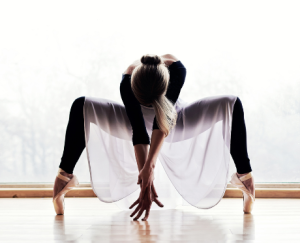
Importance of Strength Training in Dancers
Dance is definitely an art, but it’s also incredibly athletic. Benefits of strength training include bone health, decreased risk of stress fractures, prevention of acute and overuse injuries, and the ability to perform big, beautiful jumps and leaps.1 In a review of current literature on resistance training in dancers, Dr. Andrea Stracciolini and her research team at Boston Children’s Hospital review the importance of resistance training in pediatric female dancers.1 In doing that, they also dispel 5 myths about resistance training in dancers. 1 We are honored to work closely with Dr. Stracciolini and the entire team at Boston Children’s Hospital, including their dance medicine and female athlete programs, to provide the very best care to our patients.

5 Myths about Resistance Training in Dancers
Myth 1: Resistance training is unsafe for children.
There is no evidence of harmful effects of resistance training in children or adolescents with the appropriate guidance and supervision. 2, 3, 4
Myth 2: Resistance training results in bulky muscles.
In short, research is mixed and gains in strength are multifactorial.5 Proper resistance training in pre-adolescents can demonstrate increases in strength without changes in muscle hypertrophy (size).6 Several other variables emerge with puberty, but females continue to demonstrate more “linear” increases in strength compared to males.5
Myth 3: Resistance training will not increase muscle strength in girls.
Studies have shown increases in muscular strength in both males and females during pre-adolescence and early adolescence with appropriate resistance training programs.2
Myth 4: There is one right way to perform resistance training exercises.
There is no perfect number of sets and reps, but exercises are best performed and progressed under appropriate supervision.7, 8 There is also no “minimum age”, as long as safety rules can be followed.4
Myth 5: Dancers do not need to participate in resistance training.
Dance requires strength and power. Appropriate resistance programs can increase that strength and power without changing the dance aesthetic.9, 10. Studies have shown that appropriate programs addressing strength imbalances and flexibility deficits can decrease youth sports and dance injuries by up to 50% or more.11, 12, 13
Bring on the Strength Training
So, now you know the truth about several misconceptions surrounding strength training in dancers. And, you know the importance of strength training in dancers for bone health, injury prevention, and dance performance. But, how do you find the best plan?
Working with a professional that provides an individualized program and understands the changes that occur when a female dancer is growing is important.1 Physical therapists are movement experts and our physical therapists are experts in dance medicine and female athletes.
Choosing the Right Type Visit for You
If you are injured or experiencing a decrease in function, a physical therapy evaluation is the best place to start. If you are not injured, we offer Wellness Visits. During a wellness visit, your physical therapist can evaluate your specific strengths and weaknesses. Your PT can create a personalized injury prevention, fitness, and/or cross training program for you. Though currently on hold due to COVID-19, our group classes are a great way to supplement your personalized injury prevention or PT home exercise program. They are also a fun way to work out with your friends of any sport in a positive, supportive environment.
At Girl Fit, both physical therapy and Wellness Visits are offered in person or via Telehealth. To schedule an appointment email us at office@girlfitPT.com or give us a call at 617-618-9290. We want to help you stay strong, injury free, and on the dance floor!
Kate Hamilton, PT, DPT
Orthopedic Clinical Specialist
 Follow us @girlfitrocks
References
- A. Stracciolini, E. Hanson, A.W. Kiefer, G.D. Myer, A.D. Faigenbaum. Resistance training for pediatric female dancers. Journal of Dance Medicine & Science, 20 (2) (2016), pp. 64-71.
- Malina RM. Weight training in youth-growth, maturation, and safety: an evidence-based review. Clin 70 Volume 20, Number 2, 2016 • Journal of Dance Medicine & Science J Sport Med. 2006 Nov;16(6):478-87.
- Faigenbaum AD, Myer GD. Resistance training among young athletes:safety, efficacy and injury prevention effects. Br J Sports Med. 2010 Jan;44(1):56-63.
- Faigenbaum AD, Kraemer WJ, Blimkie CJ, et al. Youth resistance training: updated position statement paper from the national strength and conditioning association. J Strength Cond.
- Lloyd RS, Faigenbaum AD, Stone MH, et al. Position statement on youth resistance training: the 2014 International Consensus. Br J Sports Med. 2014 Apr;48(7):498-505.
- Granacher U, Goesele A, Roggo K, et al. Effects and mechanisms of strength training in children. Int J Sports.
- Faigenbaum AD, Lloyd RS, Myer GD. Youth resistance training: past practices, new perspectives, and future directions. Pediatr Exerc Sci. 2013 Nov;25(4):591-604.
- Faigenbaum AD, Lloyd RS, Mac- Donald J, Myer GD. Citius, Altius, Fortius: beneficial effects of resistance training for young athletes. Br J Sports Med. 2016 Jan;50(1):3-7.
- Stalder MA, Noble BJ, WilkinsonJG. The effects of supplemental weight training for ballet dancers. J Appl Sport Sci Res. 1990;4(3):95-102.
- Koutedakis Y, Sharp NC. Thighmuscles strength training, dance exercise, dynamometry, and anthropometry in professional ballerinas. J Strength Cond Res. 2004 Nov;18(4):714-18.
- Micheli LJ. Preventing injuries in team sports: what the team physician needs to know In: Chan K, Micheli L, Smith A, Rolf C, Bachl N, Frontera W, Alenabi T, (eds): FIMS Team Physician Manual. Hong Kong: CD Concepts, 2006, pp. 555-572.
- Valovich McLeod TC, Decoster LC, Loud KJ, et al. National Athletic Trainers’ Association position statement: prevention of pediatric overuse injuries. J Athl Train. 2011 Mar-Apr;46(2):206-20.
- Gildea JE, Hides JA, Hodges PW. Size and symmetry of trunk muscles in ballet dancers with and without low back pain. J Orthop Sports Phys Ther. 2013 Aug;43(8):525-33.