ACL Rehabilitation at Girl Fit
Anterior Cruciate Ligament (ACL) injuries and subsequent ACL reconstruction surgeries are a common and challenging injury sustained by many female athletes. Female athletes are up to 6x as likely to tear their ACL compared to their male counterparts, with the age of 16 being the most common age to sustain an ACL injury.1, 2 At Girl Fit, we specialize in sports, orthopedics, and adolescent female athletes, making us an excellent choice for your post op ACL rehabilitation.
A strong ACL rehabilitation program with a focus on strength training and objective measurements is essential to ensuring a safe return to play with a decreased risk of re-injury. Approximately 1 in 4 athletes who return to high-risk sports such as soccer, sustain a second ACL injury.3 Girl Fit is dedicated to providing evidence-based pre and post-operative ACL care and rehabilitation. Based on the most current research, we have developed and organized our treatment program and testing battery in order to standardize our care and ensure safe progression back to sport. This includes the use of Blood Flow Restriction (BFR) training, mtrigger biofeedback for quad recruitment, handheld dynamometry testing, hop testing, and use of Blaze Pods for neurocognitive training.
NMES and mTrigger Biofeedback
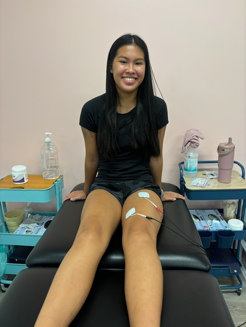
Following ACL reconstruction, the quadriceps muscle experiences inhibition, making it difficult to contract and use. Restoring the function of the quadriceps muscle early in ACL rehabilitation is essential for returning to walk safely and for eventual return to sport. At Girl Fit, we utilize Neuromuscular Electrical Stimulation (NMES) early in ACL rehabilitation to “wake up the quad” and facilitate quadriceps recruitment.
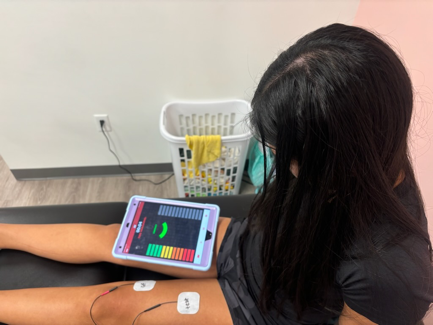
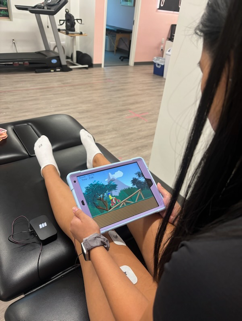
Girl Fit also utilizes mTrigger Biofeedback to encourage proper use of the quadriceps muscle and avoid common muscular compensations as well as ensure maximal muscle contractions. mTrigger also makes ACL rehabilitation more enjoyable by incorporating fun games.
Blood Flow Restriction Training (BFR)
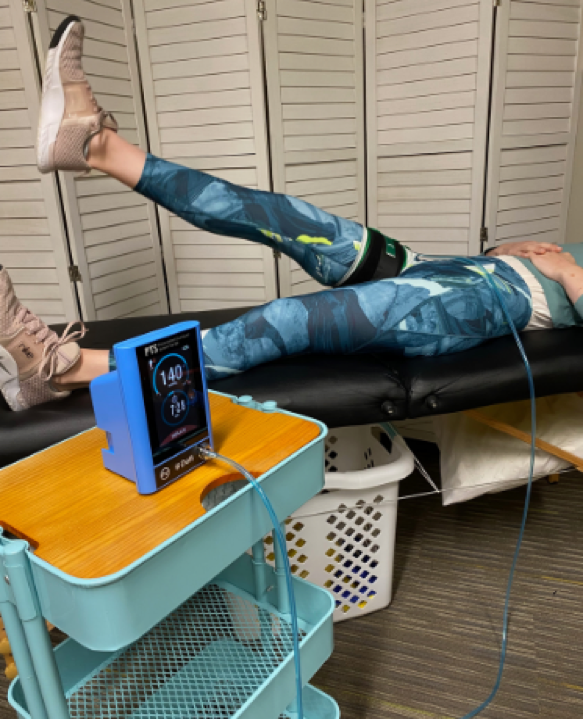
Blood flow restriction is a technique that uses a tourniquet to mimic the environment that your muscles experience during high intensity exercise. When utilizing BFR your muscles are challenged adequately to make improvements in strength even though you are only using light weights or resistance. The use of BFR allows your muscles to get stronger even if you recently had surgery and are not yet able to lift heavy weights. The research supports the use of BFR in ACL rehabilitation and can even improve post-operative outcomes!
Handheld Dynamometry

At Girl Fit, we utilize Handheld Dynamometry to measure our patient’s strength. The Handheld Dynamometer allows us to measure how much force you are able to produce in pounds (or Newtons) when using different muscle groups. We will use this data to compare the strength of your involved and uninvolved limb to help us make decisions regarding when it is safe to return to jumping, running, and to your sports. Patients who had symmetrical quadriceps strength when returning to their sport had an 84% reduced risk of re-tearing their ACL.4
Hop Testing in ACL Rehabilitation
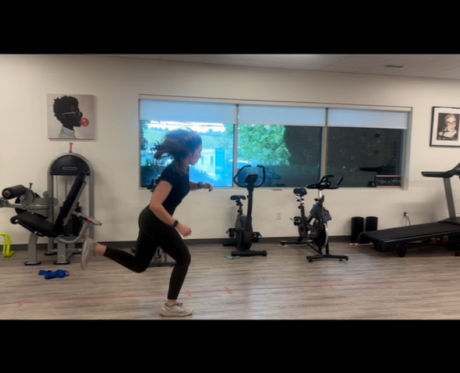
At Girl Fit we utilize a Hop Testing battery that is supported by current research to determine readiness for returning to sport after ACL reconstruction. This includes Single Leg Hop for Distance, Triple Hop for Distance, Crossover Hop for Distance, SL Vertical Hop, and 30 second Lateral Line Hops. This allows us to assess landing mechanics and power production of the involved vs. uninvolved side to ensure symmetry and decreased risk for injury when returning to sport.
Neurocognitive Training in ACL Rehabilitation
In order to adequately challenge our patients as they work to return to sport, we begin to incorporate additional cognitive tasks in effort to replicate the demands of their sport.
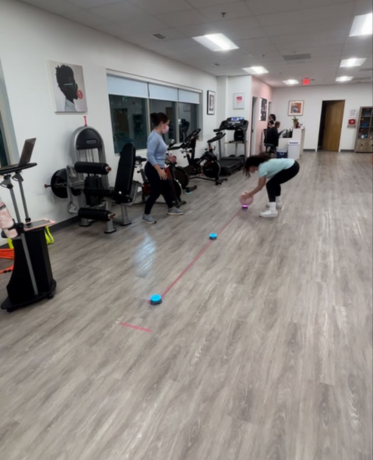
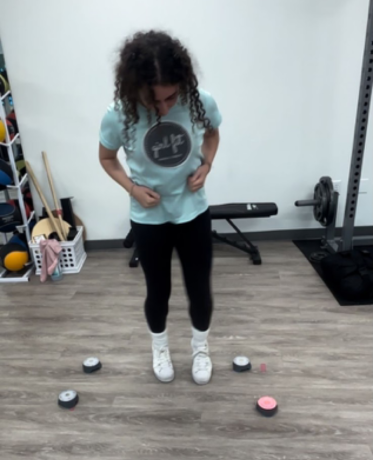
This involves the use of Blaze Pods, which challenge a patient’s reaction time and decision making. The use of Blaze Pods also allows us to track a patient’s progress over time and ensure our patient’s are ready to safely return to their sports.
At Girl Fit, we provide one-on-one care and specialize in the treatment of adolescent female athletes, a population where ACL injuries are unfortunately too common. The environment at Girl Fit is inspiring and motivating for girls and women and we are equipped with the skills and network to ensure our patients are prepared mentally and physically to return to sport. To schedule an appointment with one of our physical therapists email us at office@girlfitpt.com or call 617-618-9290.
References:
- Maheshwer, Bhargavi MD*; Paliobeis, Andrew MD*; Halkiadakis, Penelope BS*; Konda, Sreenivas PhD†; Calcei, Jacob G. MD*; Voos, James E. MD*. Anterior Cruciate Ligament Tears in the Adolescent Population: Injury Demographics and Risk of Reinjury Among High School Athletes. Journal of Pediatric Orthopaedics 43(10):p 591-597, November/December 2023. | DOI: 10.1097/BPO.0000000000002505.
- Mancino F, Kayani B, Gabr A, Fontalis A, Plastow R, Haddad FS. Anterior cruciate ligament injuries in female athletes: risk factors and strategies for prevention. Bone Jt Open. 2024 Feb 5;5(2):94-100. doi: 10.1302/2633-1462.52.BJO-2023-0166. PMID: 38310925; PMCID: PMC10838619.
- Wiggins AJ, Grandhi RK, Schneider DK, Stanfield D, Webster KE, Myer GD. Risk of Secondary Injury in Younger Athletes After Anterior Cruciate Ligament Reconstruction: A Systematic Review and Meta-analysis. Am J Sports Med. 2016 Jul;44(7):1861-76. doi: 10.1177/0363546515621554. Epub 2016 Jan 15. PMID: 26772611; PMCID: PMC5501245.
- Beischer S, Gustavsson L, Senorski EH, et al. Young Athletes Who Return to Sport Before 9 Months After Anterior Cruciate Ligament Reconstruction Have a Rate of New Injury 7 Times That of Those Who Delay Return. Journal of Orthopaedic and Sports Physical Therapy. 2020;50(2):83-90. doi:10.2519/jospt.2020.9071.