Physical Therapy After MPFL Reconstruction or Repair Surgery for Youth Athletes
For youth athletes, an active lifestyle is a fundamental part of growing up. However, injuries can happen, and one common injury among young athletes is patellar instability, often treated with a medial patellofemoral ligament (MPFL) reconstruction surgery. If your child is undergoing this procedure, understanding the importance of physical therapy in the recovery process can make all the difference in returning to their favorite sports.
What is MPFL Reconstruction Surgery?
The MPFL is a key ligament that helps stabilize the kneecap (patella) and keep it in its proper position. When this ligament is damaged—often due to trauma or repetitive stress—it can lead to dislocations and instability in the knee. MPFL reconstruction or repair surgery is aimed at reconstructing or reinforcing this ligament, allowing for better knee stability and function.

Why is Physical Therapy Essential after MPFL reconstruction surgery?
Physical therapy plays a crucial role in the recovery process after MPFL surgery. Here’s why:
- Restoring Range of Motion: After surgery, it’s common for the knee to be stiff. A physical therapist will work with your child to gently restore flexibility, ensuring they can bend and straighten their knee fully.
- Building Strength: Post-surgery, the muscles around the knee need to be strengthened to support the joint. A tailored physical therapy program will focus on strengthening the quadriceps, hamstrings, and hip muscles to enhance stability and prevent future injuries.
- Improving Balance and Coordination: Youth athletes need agility and balance in their sports. Physical therapists incorporate specific exercises to improve proprioception and coordination, which are vital for a safe return to activity.
- Preventing Re-injury: A well-structured rehabilitation program addresses the underlying causes of instability, ensuring that your child not only recovers but also becomes less susceptible to future knee injuries.

Specialized Evidence Based Care at Girl Fit
At Girl Fit, we provide one on one physical therapy care with a physical therapist who specializes specifically in female athletes. We provide the high quality evidence based care that your child needs to experience a smooth post operative rehab and successful return to sport.
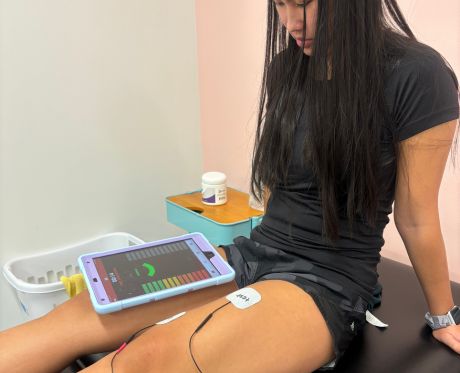
NMES and mTrigger Biofeedback
Similar to ACL surgery, following MPFL reconstruction, the quadriceps muscle experiences inhibition. This makes it difficult to contract and to use, which limits the quadricep’s ability to get stronger. Restoring the function of the quadriceps muscle early in rehabilitation is essential for returning to walk safely and for eventual return to sport. At Girl Fit, we utilize Neuromuscular Electrical Stimulation (NMES) early in ACL rehabilitation to “wake up the quad” and facilitate quadriceps recruitment.
Girl Fit also utilizes mTrigger Biofeedback to encourage proper use of the quadriceps muscle and avoid common muscular compensations as well as ensure maximal muscle contractions. mTrigger also makes ACL rehabilitation more enjoyable by incorporating fun games.
Blood Flow Restriction Training (BFR) following MPFL reconstruction surgery
Blood flow restriction is a technique that uses a tourniquet to mimic the environment that your muscles experience during high intensity exercise. When utilizing BFR your muscles are challenged adequately to make improvements in strength even though you are only using light weights or resistance. The use of BFR allows your muscles to get stronger even if you recently had surgery and are not yet able to lift heavy weights.
Handheld Dynamometry Strength Testing
At Girl Fit, we utilize Handheld Dynamometry to measure our patient’s strength. The Handheld Dynamometer allows us to measure how much force you are able to produce in pounds (or Newtons) when using different muscle groups. We will use this data to compare the strength of your involved and uninvolved limb to help us make decisions regarding when it is safe to return to jumping, running, and to your sports.
Tips for Parents following MPFL Reconstruction Surgery
- Stay Involved: Attend physical therapy sessions when possible. This involvement helps you understand the exercises and progress your child is making.
- Encourage Consistency: Regular attendance and adherence to the prescribed exercises at home are vital for a successful recovery.
- Monitor Progress: Keep an open line of communication with the physical therapist. They can provide insights into your child’s recovery and when they might be ready to return to sports.
- Be Patient: Recovery from MPFL repair surgery can take time. Celebrate small milestones along the way and encourage your child to stay positive.
Conclusion
The journey after MPFL repair surgery can be challenging, but with the right physical therapy approach, youth athletes can regain their strength, confidence, and passion for sports. By prioritizing rehabilitation, you’re not just helping your child recover; you’re also empowering them to play safe and play strong in the future. If your child is recovering from MPFL surgery, partnering with a skilled physical therapist will set them on the path to a successful return to their athletic pursuits.
At Girl Fit, we provide one-on-one care and specialize in the treatment of adolescent female athletes, a population where knee injuries are unfortunately too common. The environment at Girl Fit is inspiring and motivating for girls and women and we are equipped with the skills and network to ensure our patients are prepared mentally and physically to return to sport. To schedule an appointment with one of our physical therapists email us at office@girlfit.com or call 617-618-9290.
Previously had an MPFL reconstruction and want to make sure you’re ready for your upcoming sports season? Come see us for a Preseason Screen, Wellness Visit, and/or our Girl Fit Strength & Flexibility Class to continue to build your strength!