Injuries in Female Soccer Players
 Young female soccer players are at a significant increased risk for injury compared to other athletic populations due to the incidence of high intensity change of direction, jumping, running, and direct contact with other athletes. The most common joint and ligamentous injuries in female soccer players include anterior cruciate ligament (ACL) tears, ankle sprains, and meniscus injuries of the knee. Young female soccer players are also prone to overuse injuries including bone stress injuries and tendinitis.
Physical therapy is a critical component of returning to sport following any of these injuries and can also play a role in injury prevention. At Girl Fit Physical Therapy, we specialize in working with young female athletes to help them return to sport and minimize injury risk.
Physical Therapy and Rehabilitation
 Following a soccer related injury, physical therapy can be beneficial to decrease pain, build strength, and prevent re-injury. At Girl Fit Physical Therapy we use a combination of hands-on manual techniques, modalities such as blood flow restriction, electrical stimulation, dry needling and strengthening exercises to help our patients reach their goals and return to the soccer field.
Some injuries that we work with frequently at Girl Fit are:
- Ankle Sprains: From research we know that after experiencing one ankle sprain, you are at an increased risk for a repeat ankle sprain. Physical therapy can help improve ankle strength, stability, and proprioception as well as ensure a safe and methodical return to soccer.
- ACL-Reconstruction: Physical therapy plays an essential role prior to and after surgery with a focus on restoring range of motion, quadriceps and hamstring strength, and knee stability. Girl Fit’s physical therapists are well-versed in current, evidence-based ACL rehabilitation practices.
- Bone Stress Injury: These types of injuries typically require a period of rest from impact activities including soccer and may require use of a boot or crutches. Physical therapy can ensure that strength is not lost during this period, specifically through the use of blood flow restriction training. Physical therapists can help to facilitate a safe return to soccer once the bone injury is healed.
- Tendinitis: Tendinitis often occurs as a result of overuse or fast increase in volume of activity. Physical therapy can facilitate tissue healing with exercises such as eccentric strengthening, appropriate tendon loading, and hands-on manual techniques, including soft tissue mobilization, cupping, instrument assisted soft tissue mobilization (IASTM), and dry needling.
Injury Prevention
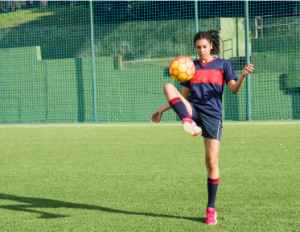 Injury prevention strategies are critical for helping to decrease the chance of injury during soccer participation. Young female soccer players are susceptible to non-contact and traumatic injuries such as ACL injuries and ankle sprains. These injuries often occur during cutting, stopping/deceleration maneuvers, and landings from jumps. Research has shown a 67% reduction in risk of non-contact ACL injuries when female athletes participate in an ACL injury prevention program. The following are important components of injury prevention:
- Strengthening: quadriceps, hip, glute, calf and core strength are all important muscles to strengthen to decrease risk of contact and non-contact injuries. Specific to female soccer players, hamstring to quadriceps strength ratio of at least 66% is shown to decrease risk for ACL injury. Having a low hamstring:quad ratio can increase risk for ACL tear and hamstring strain injuries.
- Balance training: balance training can improve lower extremity stability as well as proprioception, which is how we sense where our joints are in space. Balance training is specifically beneficial in preventing ankle sprain injuries.
- Plyometric training: Plyometrics are characterized by a rapid and explosive movement. Plyometric training includes box jumps, squat jumps, and depth jumps. Landing mechanics are an important component of plyometric training to ensure good lower body alignment and force absorption as is required in sport.
Beyond traditional physical therapy sessions, Girl Fit Physical Therapy offers one on one wellness visits as well as injury prevention classes with a physical therapist who specializes specifically in female athletes. Our PT’s Ciara and Lexi even coach youth soccer! We provide high quality, evidence based practice and use literature supported prevention programs to help our patients decrease their risk of injury. If you are interested in scheduling a physical therapy appointment, wellness visit, or are interested in injury prevention classes with one of our physical therapists, email us at office@girlfit.com or call 617-618-9290.