ACL Injury Prevention & Early Sport Specialization
The Rising Tide of ACL Injuries in Youth Sports: What You Need to Know
The anterior cruciate ligament, or ACL, plays a critical role in stabilizing the knee by connecting the femur (thigh bone) to the tibia (shin bone). While it’s a small structure, its injury can have a massive impact—especially for young athletes. Alarmingly, ACL injuries have been on the rise over the past two decades, with young female athletes seeing the most dramatic increases. Fortunately, research supports the effectiveness of exercise-based ACL injury prevention programs.
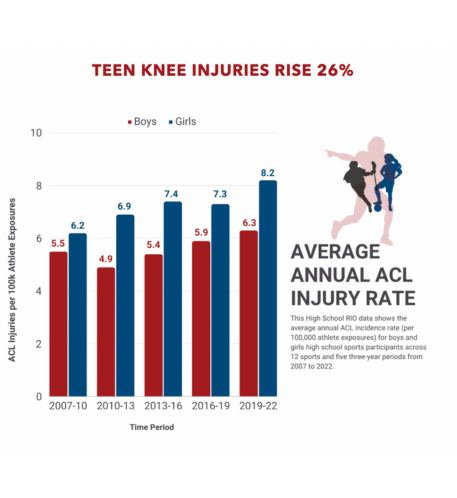
Alarming Trends in ACL Injuries
Since 2007, ACL injury rates have increased by 26% overall, with a sharper rise seen in female athletes—32% compared to 14% in males. In fact, research has shown that 1 in 10 high school girls who play multiple sports will suffer an ACL tear. These injuries are particularly common in field and court sports like soccer, basketball, and lacrosse, with volleyball and lacrosse showing the fastest-growing rates of ACL injuries among girls.
What’s even more concerning is the long-term impact of these injuries. Nearly half of athletes never return to their previous level of competition after an ACL injury. Worse still, those with a history of ACL tears are seven times more likely to require a knee replacement later in life.
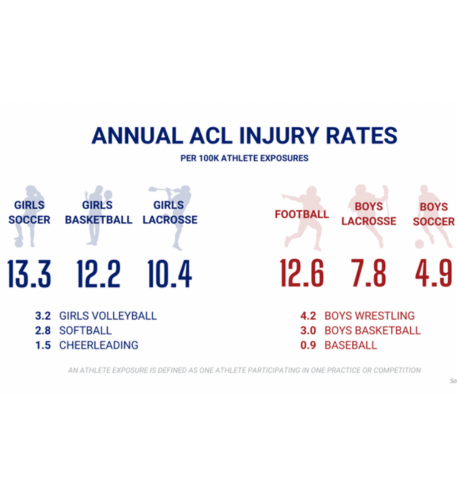
How Do ACL Injuries Happen?
ACL injuries can be caused by contact, such as collisions with another player or the ground. However, non-contact injuries—which occur during movements like cutting, landing from a jump, or stopping suddenly—are far more common in female athletes. In fact, 58% of ACL injuries in girls are non-contact, compared to 40% in boys.
Understanding Risk Factors
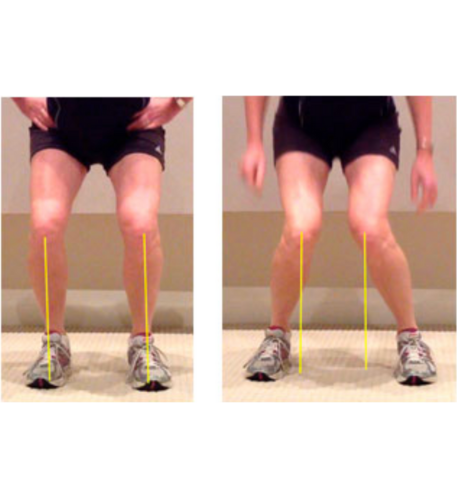
Some risk factors for ACL injuries are non-modifiable—such as anatomy, genetics, and hormones—but many others can be improved through training. These modifiable risk factors include:
- Poor neuromuscular control
- Weak hamstring and glute muscles
- Improper landing mechanics
- Inadequate core stability
- Poor recovery practices
- Inappropriate footwear
 ACL Injury Prevention Is Possible—and It Works
Fortunately, research supports the effectiveness of exercise-based ACL injury prevention programs. A 2022 clinical practice guideline recommends that athletes aged 12 to 25 incorporate these programs into their training routines. For the best results, programs should:
- Last more than 20 minutes
- Be performed multiple times per week
- Be included in both pre-season and regular season
- Be used in any training load over 30 minutes per week
One Program to Start With: FIFA 11+
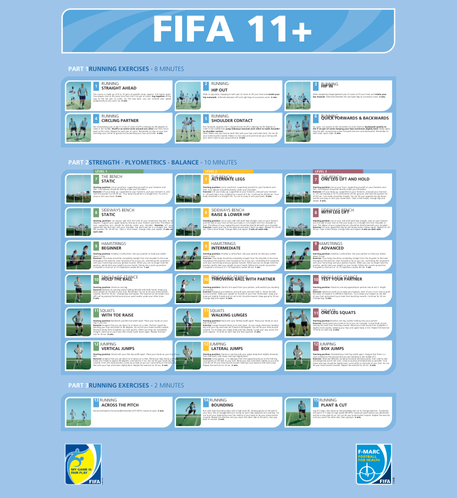
A highly recommended prevention tool is the FIFA 11+ program. Designed for athletes of all levels, this 12-part exercise routine focuses on strength, balance, and impact control—all of which are critical for ACL injury prevention. With various levels of difficulty, it’s adaptable to individual needs while still grounded in evidence-based practices.
How to be proactive about ACL Injury Prevention
ACL injuries can be devastating—but they’re not inevitable. By raising awareness, improving training techniques, and implementing targeted prevention programs, we can protect young athletes and help them stay in the game they love for years to come.
Whether you’re a coach, parent, or athlete, taking proactive steps now can make all the difference later.
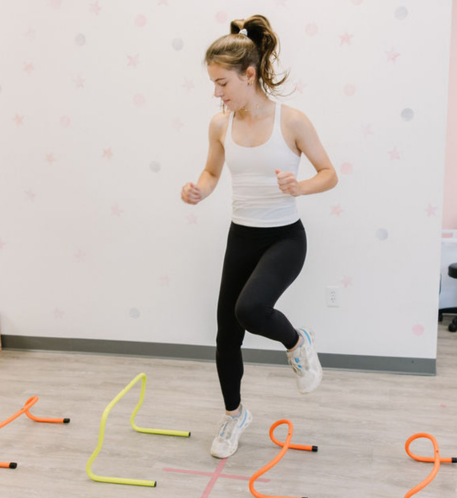
photo by Sara Sniderman Photography
Early Sport Specialization: Why Delaying May Be the Best Move for Young Athletes
In today’s competitive youth sports culture, early sport specialization—when a child under 12 focuses on a single sport year-round—is becoming increasingly common. But while some believe this path increases the chances of reaching elite or collegiate levels, the evidence suggests otherwise. In fact, early specialization may do more harm than good.
What Is Early Sport Specialization?
Early sport specialization typically includes three components:
- Organized, structured sport for a child under 12—often replacing free play.
- Exclusive participation in one sport, quitting others to focus on that single activity.
- Training or competing more than 8 months per year in that one sport.
The Hidden Costs of Specializing Too Soon
Despite the pressure to specialize early, the negative consequences can be significant. These include:
- Burnout – Emotional and physical exhaustion that leads to dropping out of sport altogether.
- Injury – Particularly overuse injuries, which occur from repetitive strain without adequate rest.
- Poor Long-Term Development – Limited exposure to varied physical skills and movement patterns may hinder overall athletic growth.
Real-World Data: What the Research Shows
Studies consistently show that early sport specialization does not correlate with becoming an elite athlete. In fact, the opposite appears to be true:
- NCAA Division I Athletes:
- 70% did not specialize in their sport until after age 12.
- 88% played multiple sports growing up.
(These numbers are high likely because those athletes avoided burnout, injury, and dropout.)
- Female Collegiate Athletes Who Specialized Before Age 14:
- 71.4% had a history of injuries.
- 48.8% reported multiple injuries.
- 6% had multiple injuries in college.
- Youth Who Trained Over 28 Hours/Week in One Sport Before High School:
- 90% reported multiple injuries (vs. 56.3%).
- 40% had multiple college injuries (vs. 12.5%).
- 60% needed surgical treatment (vs. 22.9%).
The bottom line? Early specialization may increase injury risk without improving your child’s chances of playing in college or beyond.
What to Avoid
To protect your child’s long-term development and well-being, avoid the following:
- Specializing in a single sport before age 12 – Delay as long as possible.
- Training more hours per week than your child’s age – A 10-year-old shouldn’t train more than 10 hours/week.
- Playing one sport more than 8 months per year – Allow for rest and exposure to other activities.
What to Watch For
Early warning signs that your child may be overtraining or over-specializing include:
- Decreased performance
- Chronic pain or fatigue
- Loss of interest or enjoyment
- Increased time off due to injuries
What to Encourage
Instead of specialization, promote a balanced and diverse sports experience:
- One organized sport per season
- Unstructured free play – Kicking a soccer ball with friends, riding bikes, or just playing tag.
- Multi-sport participation – Especially in different seasons or sports with different skill demands (e.g., swimming in summer, basketball in winter).
These habits help build a well-rounded athlete and, more importantly, a healthy and happy child.
ACL Injury Prevention, Supporting Recovery, and Return to Sport
The journey after ACL reconstruction surgery can be challenging, but with the right physical therapy approach, youth athletes can regain their strength, confidence, and passion for sports. By prioritizing rehabilitation, you’re not just helping your child recover; you’re also empowering them to play safe and play strong in the future.
If your child is recovering from an ACL injury, partnering with a skilled physical therapist is one of the most important steps you can take. A strong rehab plan sets them on the path to a successful, confident return to their athletic pursuits.
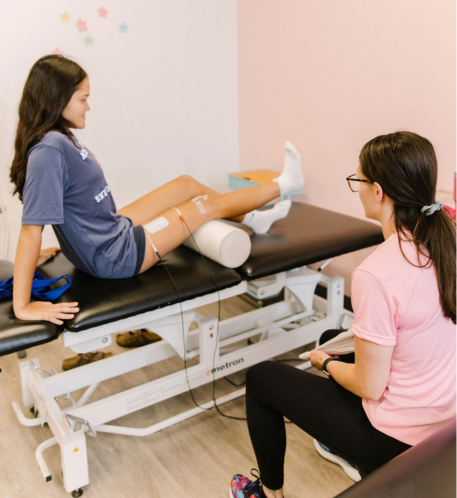
photo by Sara Sniderman Photography
At Girl Fit, we provide one-on-one care and specialize in the treatment of adolescent female athletes — a population where knee injuries are unfortunately too common. Our clinic offers a motivating, supportive environment designed specifically for girls and women, and we’re equipped with the expertise and network to ensure our patients are mentally and physically prepared to return to sport.
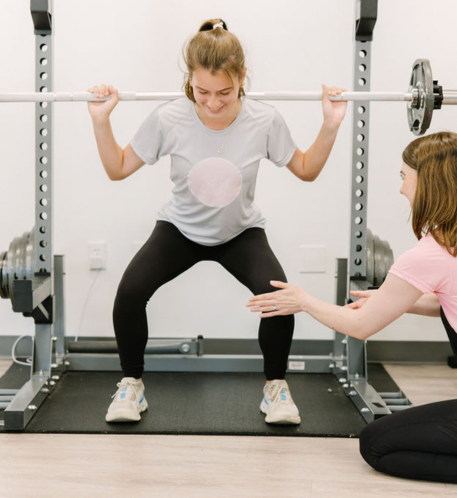
photo by Sara Sniderman Photography
📅 To schedule an appointment, email us at office@girlfit.com or call 617-618-9290.
Getting Ready for the Season?
Want to make sure you’re prepared for your upcoming sports season? Come see us for:
Let us help you stay healthy, strong, and ready to perform.
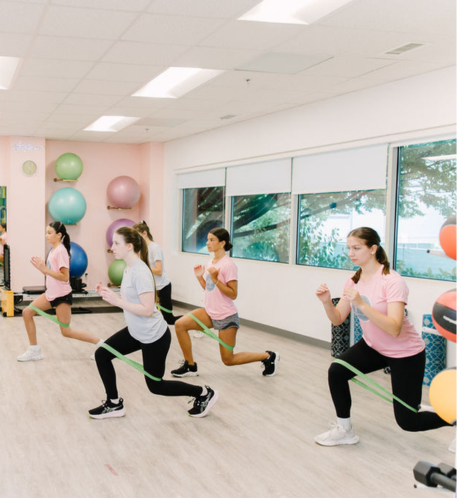
photo by Sara Sniderman Photography
FIFA 11+
References
- Smith HC, Vacek P, Johnson RJ, et al. Risk factors for anterior cruciate ligament injury. Sports Health. 2012;4(1):69-78. doi:10.1177/1941738111428281
- Mancino F, Kayani B, Gabr A, et al. ACL injuries in female athletes: prevention strategies. Bone Jt Open. 2024;5(2):94-100. doi:10.1302/2633-1462.52.BJO-2023-0166
- Arundale AJH, Bizzini M, Dix C, et al. Exercise-Based Knee and ACL Injury Prevention. J Orthop Sports Phys Ther. 2023;53(1):CPG1-CPG34.